
Tortellini Alfredo with Ham & Peas
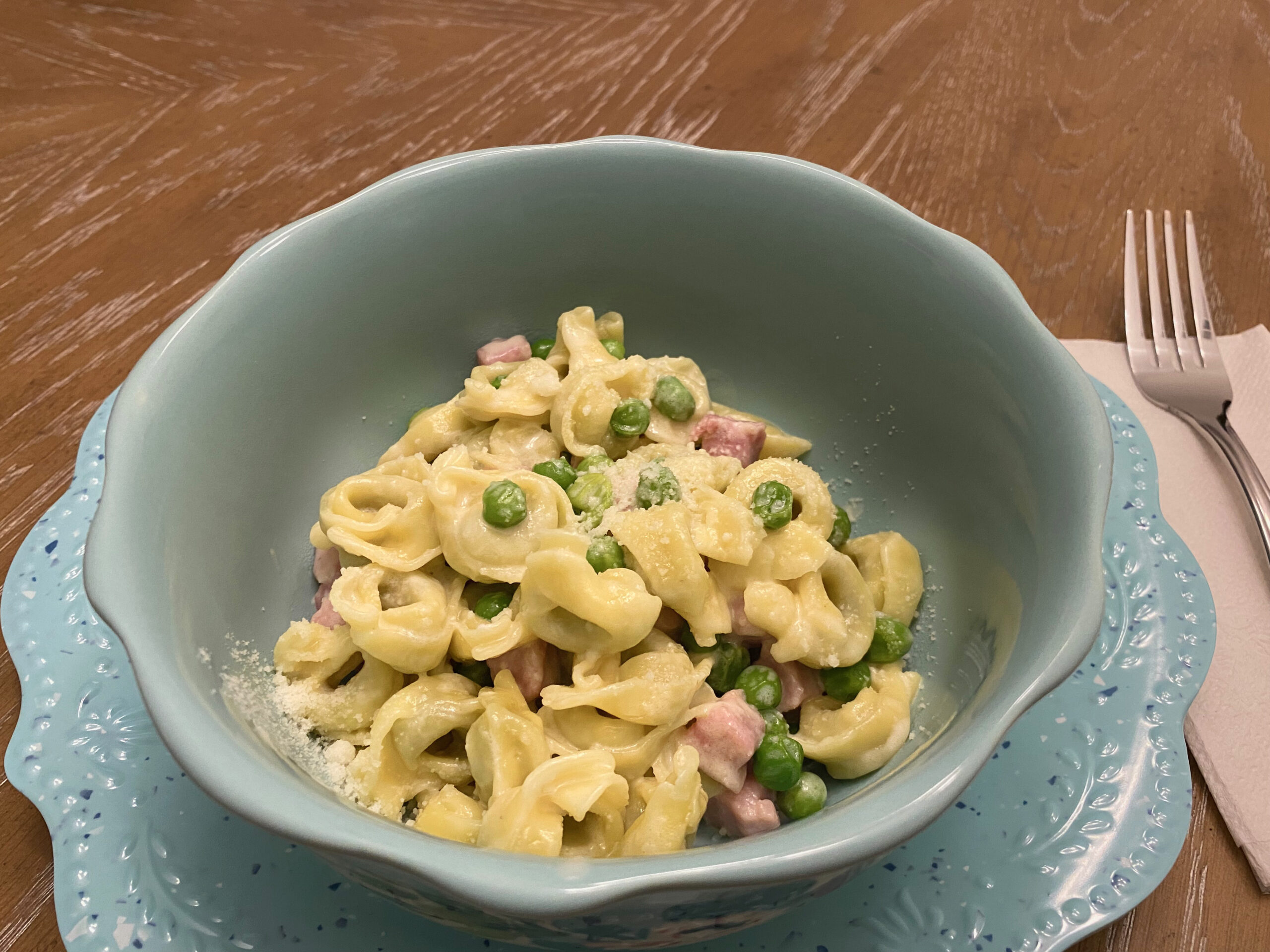
Tortellini Alfredo with Ham & Peas
Ingredients
Method
- Kosher salt to season your pasta water (copious amount, a good palmful)
- Cook your tortellini by the package directions, except take the tortellini out of the water 2 minutes before al dente. You want to finish cooking the tortellini in the sauce. I use a spider to fish out my tortellini. I reserve the pasta water in case you need to thicken your sauce.
- While the tortellini are cooking, add 2 T unsalted butter to a pre-heated skillet over medium high heat. Once melted add your ham and cook for 2-3 minutes, add your garlic, cook for an additional minute. Now add your chicken broth, heavy cream, pecorino romano, and peas. Add your tortellini when done and continue to cook for 2-3 minutes until sauce is thickened and tortellini is tender.
Video
Tried this recipe?
Let us know how it was!Why finish the tortellini in the sauce?
Remove the tortellini from the boiling pasta water about two minutes before they reach al dente so they finish cooking in the sauce. Reserve a small amount of the pasta cooking water before removing the tortellini and set it aside to adjust the sauce consistency if needed.
What is Tortellini Alfredo with Ham & Peas?
Cheese-filled tortellini are combined with a cream-and-cheese sauce and mixed with diced ham and peas. Compared with a fettuccine-style Alfredo, using stuffed pasta means many bites deliver both the sauce and the tortellini’s cheese filling together, producing a richer, more compact mouthfeel.
Why Pecorino Romano and starchy pasta water matter for the sauce
Pecorino Romano is a salty, tangy sheep’s-milk cheese that melts and contributes a bright savory note to balance the cream. Starch released into the pasta cooking water helps the cream and grated cheese bind into a smooth, clingy sauce; reserving a small amount of that water lets you adjust consistency so the sauce emulsifies and coats the tortellini. Finishing the tortellini in the sauce lets the pasta absorb flavor and helps the sauce thicken and become silkier.
Dried vs. frozen tortellini — what to expect
Dried tortellini typically holds a slightly firmer bite, while frozen tortellini often cooks more quickly and can be softer. Cooking times and final texture vary by product, so expect some difference in mouthfeel depending on which type you use and watch the pasta as it reaches the point where it will finish cooking in the sauce.
Watch Dr. J Make Tortellini Alfredo with Ham & Peas
Watch Dr. J make Tortellini Alfredo with Ham & Peas and see how it comes together.


