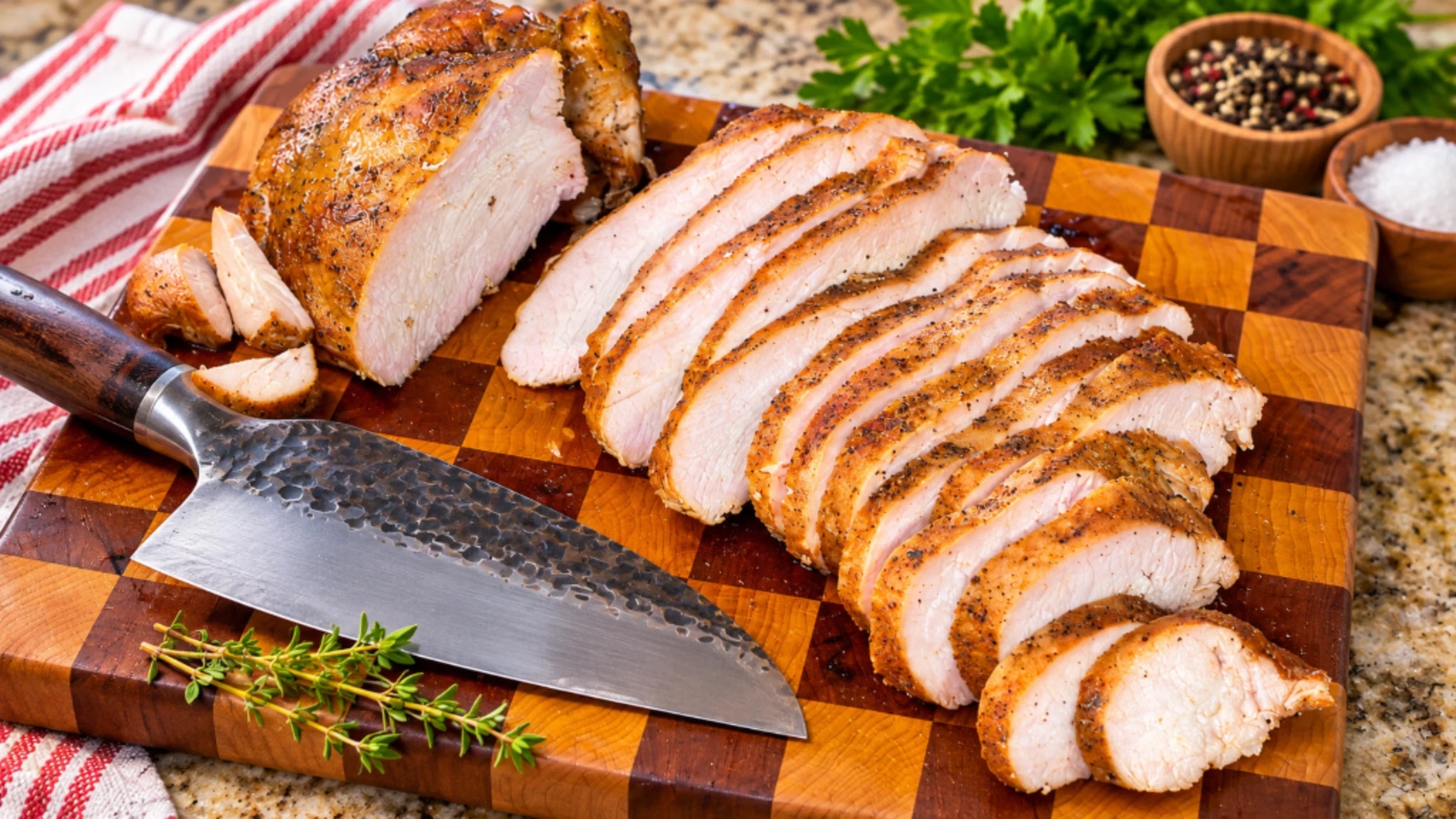
Ingredients
Equipment
Method
BRINE THE TURKEY — 12–24 HOURS BEFORE SMOKING
- Using a sharp knife, remove the skin from the turkey breast.
- Pour the water into a 2-gallon food-safe storage bag.
- Quarter the orange and halve the limes. Squeeze their juice into the bag, then add the fruit pieces.
- Add the sugar, garlic powder, kosher salt, and black pepper.
- Add the turkey breast, seal the bag securely, and place it in a large dish in the refrigerator for 12–24 hours.
SMOKING DAY
- Preheat your smoker to 250°F (121°C), using your preferred wood pellets, chips, or logs.
- Remove the turkey from the refrigerator about 30 minutes before smoking.
- Remove it from the brine and pat dry with paper towels. Discard the used brine.
- Season liberally with your preferred BBQ rub, along with salt and pepper to taste.
- Insert a temperature probe into the thickest part of the breast and place the turkey in the smoker.
- Smoke until the internal temperature reaches 120–125°F (49–52°C).
- Remove the turkey and place it on heavy-duty aluminum foil. Remove the probe.
- Slice the stick of butter lengthwise, place the butter on the foil, and set the turkey on top.
- Add the chicken broth. Wrap tightly in two layers of foil to prevent leaks.
- Reinsert the probe through the foil into the thickest part of the turkey.
- Return the wrapped turkey to the smoker and continue cooking until it reaches 160°F (71°C).
- Remove it from the smoker and rest for 20 minutes before slicing. Let it come up to 165°F (74°C).
Video
Notes
Brine the turkey in the refrigerator for 12–24 hours. Use a food-safe storage bag placed inside a large dish to catch possible leaks.
The cooking time will depend on the size and shape of the turkey breast, your smoker, and outdoor conditions. Use a reliable meat thermometer rather than cooking strictly by time.
Kevin's method calls for wrapping the turkey at an internal temperature of 120–125°F (49–52°C), removing it from the smoker at 160°F (71°C), and resting for 20 minutes. For USDA's recommended poultry safety temperature, confirm the thickest part reaches 165°F (74°C) before serving.
The BBQ rub and additional salt and pepper are added to taste. Since the brine and many BBQ rubs already contain salt, adjust the final seasoning accordingly.