Pork Tenderloin with Port Wine & Fig Sauce
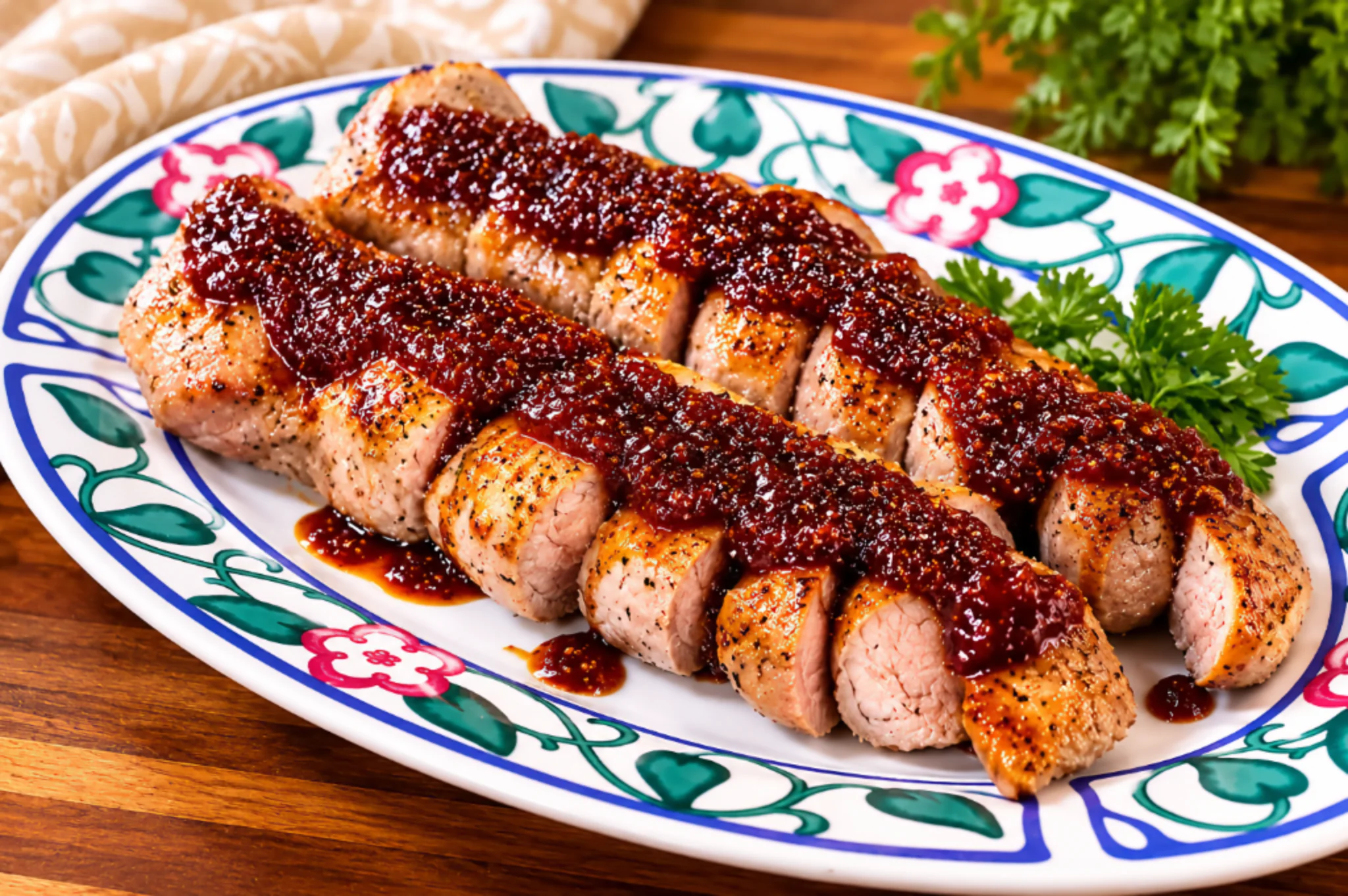
Pork Tenderloin with Port Wine & Fig Sauce
Ingredients
Method
- Preheat oven to 400 degrees.
- Season the tenderloins with salt and pepper.
- Heat the oil in a cast iron or oven safe skillet over medium high heat. Once hot, the oil will be shimmering and begin to smoke.
- Add both tenderloins to the pan and sear for 2-3 per side till browned. Place a temperature probe in the middle of one tenderloin.
- Remove from the burner and place in the oven. Cook till internal temperature reaches 145 degrees (I take mine out at 143 degrees). This will take approximately 15 -18 minutes (if you don’t have a temperature probe).
- Take out of the oven and place on a platter. Tent lightly with foil. While the pork is resting, make your sauce.
- Place all ingredients in a saucepan over medium heat. Bring sauce to a low boil and reduce by half. Use an immersion blender to blend smooth. You can also place this in a stand blender to process.
- Note: I made the sauce the day before I cooked the tenderloin. You can make this a few days ahead of time. You can also make and freeze for another use.
- I did add a splash of chicken stock to thin the sauce while reheating.
Video
Tried this recipe?
Let us know how it was!Sauce: Make-Ahead, Freezing & Reheating
The port wine and fig sauce can be made a few days ahead or made and frozen for later use. When reheating, thin the sauce with a small splash of low‑sodium chicken stock if it is thicker than desired. The sauce is finished smooth after reduction; blend it directly in the pan with an immersion blender or transfer to a stand blender to process.
Why sear, then roast — and why resting matters
Searing the tenderloins in a hot pan produces Maillard browning, which adds concentrated savory flavor and a pleasing crust. Finishing in the oven brings the center up to the target internal temperature more evenly than leaving the meat in the pan alone. After cooking, tenting with foil and letting the meat rest allows juices to redistribute and a small amount of carryover cooking, which helps slices stay juicy when cut.
Choosing the port and the figs
Dried Turkish figs are sweet and fairly plump; they break down during simmering and contribute body and natural sweetness to the sauce. Port styles vary: ruby ports are fruitier and brighter, while tawny ports offer more caramel, toasted‑nut, and dried‑fruit notes. Either style will produce a delicious sauce; the choice mainly affects the final flavor profile rather than the method.
Finishing the sauce for a smooth result
Reduce the sauce until it is noticeably syrupy and coats the back of a spoon before blending. Blend directly in the pan with an immersion blender for convenience, or transfer to a stand blender for a very smooth texture.
Watch Dr. J Make Pork Tenderloin with Port Wine & Fig Sauce
Watch Dr. J make Pork Tenderloin with Port Wine & Fig Sauce and see how it comes together.